
Smart Trade Insights
  • Business
  • Economy
  • Investing
  • Politics
Top Posts
Syntholene Selects Papadakis Engineering as Integration Partner for...
Summit Royalties Announces Agreement to Acquire Royalty on Newmont’s...
Lahontan Announces Private Placement
Harvest Gold Expands Its Mosseau Property Along Strike...
CHARBONE presentera a la conference Hydrogen East et...
Tartisan Nickel Corp. Intersects 24.6 Metres of 0.71%...
LaFleur Minerals Inc.Taking Key Steps to Advance Position...
NevGold Mobilizes Drill To Test Historical Leach Pads...
Cartier Cuts 7.1 g/t Au over 8.0 m...
Drill Contract Awarded for Two Pools Maiden Drill...
  • Business
  • Economy
  • Investing
  • Politics

Smart Trade Insights

Investing

New Research on Deep-Sea Mineral Sources Reveals Ecological Importance

by admin September 18, 2025
September 18, 2025
New Research on Deep-Sea Mineral Sources Reveals Ecological Importance

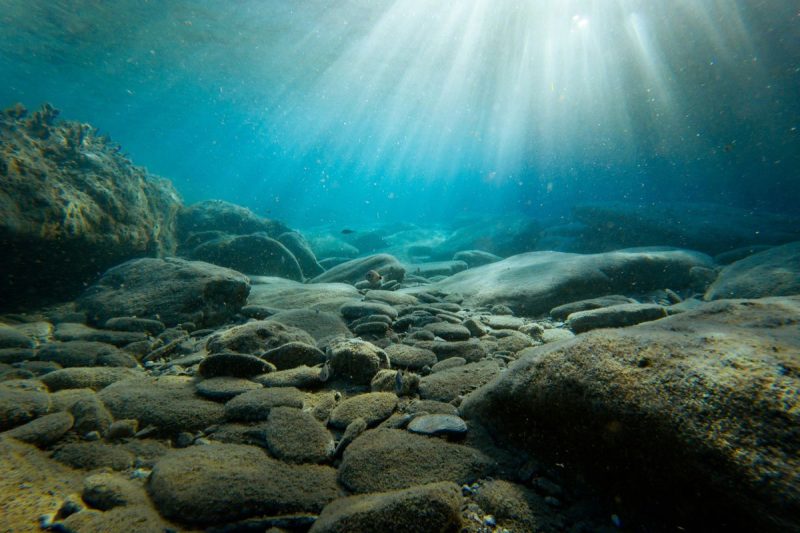
The seabed of the Baltic Sea is scattered with rock-like lumps that may one day fuel the global race for rare metals.

But new research suggests these formations, known as mineral concretions, are far more than a potential resource: they are complex, slow-growing structures that play an important role in marine ecosystems.

A team from the Geological Survey of Finland (GTK) has used synchrotron-based imaging at the Canadian Light Source (CLS) in Saskatchewan to probe the makeup of these concretions.

Their findings shed light on how the lumps form, how they differ across environments, and how their removal could disrupt life on the sea floor.

“These concretions act like a sponge, absorbing anything that is in the water column,” said geologist Joonas Wasiljeff, who was part of the GTK team. “We still don’t know enough that we can just go collect everything from the seafloor. If we remove them that may have drastic impacts on the ecosystem that may not ever recover.”

The GTK team identified three broad types in the Baltic Sea: iron-rich crusts, manganese-heavy discs and spheroidal nodules. Each type’s shape and composition are closely linked to environmental factors such as currents, sediment deposits and oxygen levels.

Crusts typically form in shallower, turbulent waters near shore, where stronger currents bring in terrestrial material like clays and micas. These iron-rich formations also contain trace amounts of vanadium and some rare earth elements.

By contrast, the discs and spheres tend to form in calmer, deeper water. They are more manganese-rich and host metals such as zinc, cobalt and higher concentrations of rare earth elements.

Despite the presence of resources, the rock-like lumps do more than trap metals. They provide critical hard surfaces on the seabed, where creatures like clams can anchor and other marine life can establish itself.

Their removal, Wasiljeff cautioned, risks breaking links in the food web and destabilizing benthic ecosystems.

At the same time, the economic allure of these deposits is clear. With rising demand for metals such as cobalt and rare earth elements — critical for batteries, electronics and renewable energy technologies — seabed mining has become a frontier of resource exploration.

China, Norway and Pacific island nations have already advanced projects targeting similar deposits in international waters.

The GTK study adds weight to calls for caution, showing that the same features that make these concretions promising as a resource also make them slow to form and ecologically significant.

The timing of the Baltic findings is also crucial as seabed mining takes on new geopolitical weight.

US President Donald Trump’s push to build an American stockpile of critical minerals from the seafloor has gained fresh momentum with Bahrain throwing its support behind Impossible Metals, a California startup.

However, debates regarding deep sea mining’s feasibility continue. The International Seabed Authority (ISA), the UN agency tasked with regulating deep-sea mining, has issued over 30 exploratory permits but has yet to finalize rules for commercial extraction.

That regulatory vacuum has fueled unilateral actions by states and companies alike, raising questions about whether collective governance of the seabed can hold.

The researchers noted that the mineral phases and formation mechanisms of Baltic Sea concretions resemble those found in other shallow marine environments worldwide. That suggests lessons from the Baltic could apply to seabed resource debates in other regions.

The broader implication, according to Wasiljeff, is that decisions on seabed mining must weigh both the potential supply of critical metals and the ecological functions of these deposits.

Securities Disclosure: I, Giann Liguid, hold no direct investment interest in any company mentioned in this article.

This post appeared first on investingnews.com

previous post
Silver47 Exploration – OTC Markets Request
next post
Canada’s Place in Global Mining: Why it’s a Top Jurisdiction for Investors and Companies

You may also like

New Seismic Studies Upgrade Raya Prospect

August 19, 2024

CHARBONE Hydrogen and ABB Sign Agreement to Advance...

March 14, 2025

North Shore Uranium

August 14, 2025

Auto Industry Takes Hit as China’s Rare Earths...

June 6, 2025

Exclusive Interview with Forward Water Technologies CEO Howie...

November 16, 2024

Dec24 Appendix 5B

January 29, 2025

Alvopetro Announces Q3 2024 Results and an Operational...

November 7, 2024

Diamond Drilling Commenced at Paranaíta Gold Project

October 28, 2025

Kinetiko Energy: Developing South Africa’s Largest Onshore Natural...

February 10, 2026

Astral & Maximus to Merge Via Recommended Takeover...

February 3, 2025

    Fill Out & Get More Relevant News


    Stay ahead of the market and unlock exclusive trading insights & timely news. We value your privacy - your information is secure, and you can unsubscribe anytime. Gain an edge with hand-picked trading opportunities, stay informed with market-moving updates, and learn from expert tips & strategies.

    Recent Posts

    • Syntholene Selects Papadakis Engineering as Integration Partner for Novel Thermal-Hybrid Synthetic Fuel Demonstration Facility Heat Exchanger System

      March 12, 2026
    • Summit Royalties Announces Agreement to Acquire Royalty on Newmont’s Saddle North Deposit

      March 12, 2026
    • Lahontan Announces Private Placement

      March 12, 2026
    • Harvest Gold Expands Its Mosseau Property Along Strike To The North And South Adding 24 Claims And 8 Additional Mineral Showings

      March 12, 2026
    • CHARBONE presentera a la conference Hydrogen East et annonce le developpement d’un hub d’approvisionnement dans le marche de l’Atlantique via sa filiale

      March 12, 2026
    Promotion Image

    banner ads

    Categories

    • Business (943)
    • Economy (839)
    • Investing (4,085)
    • Politics (747)
    • Privacy Policy
    • Terms & Conditions

    Disclaimer: smarttradeinsights.com, its managers, its employees, and assigns (collectively “The Company”) do not make any guarantee or warranty about what is advertised above. Information provided by this website is for research purposes only and should not be considered as personalized financial advice. The Company is not affiliated with, nor does it receive compensation from, any specific security. The Company is not registered or licensed by any governing body in any jurisdiction to give investing advice or provide investment recommendation. Any investments recommended here should be taken into consideration only after consulting with your investment advisor and after reviewing the prospectus or financial statements of the company.


    Copyright © 2026 smarttradeinsights.com | All Rights Reserved